• 815-943-4430
  • Emergency Repair
  • Contact
Hartwig Mechanical
  • Commercial
    • HVAC Maintenance
    • HVAC Installation
    • HVAC Repair
    • Plumbing Installation
    • Plumbing Service
    • Building Automation Systems
  • Industrial
    • Industrial HVAC Service & Maintenance
    • Equipment Installation
    • Piping & Welding
    • Pipe Re-Lining Services
  • Design-Build
    • Custom Metal Fabrication
    • Ventilation Systems
  • Industries
        • Manufacturing
        • Multi-Family
        • Healthcare & Medical
        • Education
        • Public Facilities
        • Retail & Hospitality
        • Cold Storage & Processing Plants
  • Areas We Serve
  • About Us
    • Leadership Team
    • Partners
    • Careers
    • Testimonials
  • Blog
  • Menu Menu

Why Is My Commercial HVAC Making Loud Noises? Common Causes to Watch For

A loud bang, a rattle, or a constant hum coming from your commercial HVAC system is rarely a one-off. When you hear an HVAC making loud noise overhead or on the roof, it usually means a component is wearing down or starting to fail. Catching that signal early is the difference between a quick service call and a full system outage during peak season.

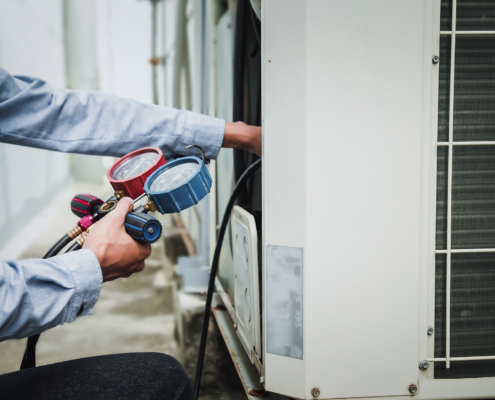
Industrial Air Conditioning Inspection Engineer

What Causes an HVAC System to Make Loud Noises?

Commercial HVAC equipment is built to run quietly. When you hear your HVAC making loud noise, something has changed inside the system. Loose hardware, worn bearings, refrigerant pressure issues, electrical faults, and unbalanced fans all show up first as sounds before they become full breakdowns. That is why facility managers who pay attention to the audible behavior of their rooftop units, air handlers, and chillers tend to spend less on emergency repairs each year. The system is talking to you, and it is worth listening to.

The location of the sound also tells you a lot. Noises from the air handler usually point to fan or motor problems. Noises from the rooftop unit often involve the compressor or the fan assembly. Noises from inside the ductwork can mean loose dampers, debris, or expansion and contraction issues. For facilities on an HVAC maintenance contract, this kind of noise diagnosis often happens during a routine visit before it ever becomes an emergency.

Common HVAC Noises and What They Mean

Different sounds point to different problems. Once you start putting a name on the noise, the diagnosis gets a lot faster. Most cases of an HVAC making loud noise fall into a few familiar patterns that experienced commercial technicians recognize quickly, and most can be caught early with consistent preventive maintenance.

HVAC Rattling Noise

An HVAC rattling noise often comes from loose hardware, an unsecured access panel, or debris caught in a fan blade. The fix is sometimes as simple as tightening a few screws, but a rattle that gets louder over time can also signal worn fan blades or failing bearings. If you ignore it, you risk a fan blade failure that can damage other components inside the unit.

HVAC Humming Noise

A steady HVAC humming noise usually points to an electrical or motor-related issue. A failing capacitor, a contactor stuck partway closed, or a motor that is drawing too much current can all produce that low, constant hum. Some humming is normal at startup, but persistent humming after the unit cycles on is worth checking. Electrical issues that produce humming can also create heat, which raises the risk of burnout if left alone.

Banging or Clanking

A loud bang or clank when the system starts up often means a loose or broken part inside the compressor or blower assembly. It can also signal that the system has cycled hard against a stuck valve or that a water hammer is happening in connected piping. Banging noises rarely fix themselves, and they often get worse fast. This is one of the sounds that warrants a same-day service call.

Grinding or Screeching

Metal-on-metal sounds, including grinding and high-pitched screeching, almost always come from a motor or bearing problem. Bearings dry out, motors lose alignment, and belts slip or fray. Once metal starts grinding on metal, internal damage accelerates. A grinding HVAC making loud noise is one of the surest signs that the unit needs attention before the next operating cycle.

Squealing or Whistling

High-pitched squealing usually comes from a belt that is slipping, glazing, or about to break. Whistling sounds tend to come from a duct leak or a closed return register pulling air through a small gap. Belt issues can stop a fan completely if the belt snaps, while whistling points to airflow imbalances that drive up energy costs.

Component-Level Issues That Cause HVAC Noise

Looking at the system by component instead of by sound is another useful diagnostic angle. Several specific parts of a commercial HVAC unit are common noise sources, and knowing where to look helps you describe the problem accurately when you call in a service technician.

Common noise-producing components include:

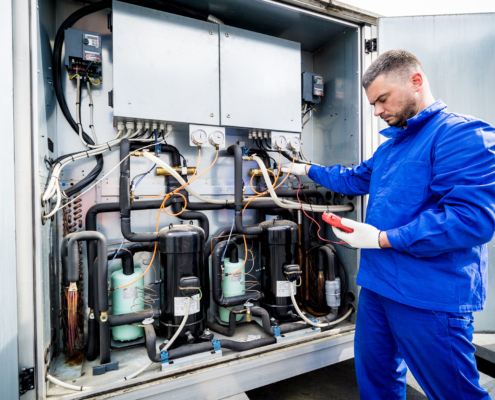
  • Compressor: Compressor noise, including loud humming, knocking, or grinding, often signals refrigerant pressure problems, internal mechanical wear, or motor issues
  • Fan Motors and Blower Assemblies: Worn motor bearings, unbalanced blades, or loose mounting hardware all create vibration and rattling
  • Belts and Pulleys: Slipping or glazed belts squeal, while loose pulleys produce a metallic clicking
  • Dampers and Ductwork: Stuck dampers slam, while expanding metal ducts pop and tick during temperature swings
  • Refrigerant Lines: Hissing or gurgling can mean a refrigerant leak, which affects both noise and cooling performance

Facilities with building automation systems get an additional advantage here, since vibration and current monitoring can flag failing components before any human ears them.

Schedule commercial HVAC maintenance with Hartwig Mechanical to get any HVAC making loud noise diagnosed and resolved before the unit quits on you completely.

Our Maintenance Service

When HVAC Noises Mean an Emergency

Some HVAC noises can wait until your next scheduled service visit. Others should trigger an emergency call. Knowing the difference protects both your equipment and your operating budget.

A loud bang followed by the unit shutting down, smoke or burning smells paired with humming, sudden screeching that does not stop, or any noise combined with a refrigerant smell all qualify as emergencies. So does any HVAC making loud noise that coincides with the system failing to cool, heat, or move air. In those situations, the next operating cycle can do permanent damage to the compressor or motor, and the cost of a replacement always outweighs the cost of an emergency repair call.

For commercial buildings, timing matters as much as diagnosis. A loud noise on a Friday afternoon ignored over the weekend can mean Monday morning starts with no heat or cooling, lost tenants, and a crisis call to leadership. That is the exact scenario a fast response prevents.

Trust Hartwig Mechanical to Diagnose the Sound

An HVAC making loud noise is your building telling you something. The right response is not louder background music or a fresh filter. It is a trained technician with the experience to listen, diagnose, and fix the actual problem before it grows into a full system outage.

Hartwig Mechanical has spent decades helping commercial property owners across Northern Illinois and Southern Wisconsin keep their HVAC systems running quietly and efficiently. Our team handles everything from routine preventive maintenance to full diagnostic service calls, and we know what every sound on a commercial system actually means. We treat every noise the way an experienced doctor treats a symptom: as a clue, not the whole problem. That experience saves our clients money, protects their tenants, and keeps their buildings comfortable through every season.

If your commercial HVAC has started making sounds that have not been there before, contact Hartwig Mechanical today to schedule a service visit before the noise turns into downtime.

Share This Post

  • Share on Facebook
  • Share on X
  • Share on Pinterest
  • Share on LinkedIn
  • Share on Tumblr
  • Share on Vk
  • Share on Reddit
  • Share by Mail

More Like This

Warning Signs Your Commercial Hvac System Needs Attention

10 Warning Signs It’s Time to Schedule Commercial HVAC Maintenance

HVAC Repair, Preventative Maintenance
https://hartwigmechanical.com/wp-content/uploads/2026/01/Warning-Signs-Your-Commercial-HVAC-System-Needs-Attention.jpg 1250 2000 Abstrakt Marketing /wp-content/uploads/2025/06/Hartwig_lowres-360w.png Abstrakt Marketing2026-01-23 14:57:362026-06-29 12:37:1310 Warning Signs It’s Time to Schedule Commercial HVAC Maintenance
Key Considerations When Selecting A Commercial Hvac Service Provider

Factors to Consider When Choosing an HVAC Contractor

Commercial, Preventative Maintenance
https://hartwigmechanical.com/wp-content/uploads/2025/10/Key-Considerations-When-Selecting-a-Commercial-HVAC-Service-Provider.jpg 1250 2000 Abstrakt Marketing /wp-content/uploads/2025/06/Hartwig_lowres-360w.png Abstrakt Marketing2025-10-06 12:24:472026-06-10 09:56:37Factors to Consider When Choosing an HVAC Contractor

Categories

  • Building Automation Systems
  • Commercial
  • Commercial Plumbing
  • HVAC Repair
  • Industrial HVAC
  • Pipe Lining
  • Preventative Maintenance

Location

Rockford, IL (West)
3537 Merchandise Drive
Rockford, IL 61109

Harvard, IL (North)
20800 East Brink Street
Harvard, IL 60033

Mokena, IL (South)

9850 W 190th St,
Mokena, IL 60448

Get In Touch

Phone
(815) 943-4430

Email
Email Us >

Services

Commercial HVAC

Plumbing Services

Industrial HVAC

Design-Build

About Us

Hartwig Mechanical delivers full-scale mechanical solutions with precision, reliability, and rapid response.

Website by Abstrakt Marketing Group ©
  • Sitemap
  • Privacy Policy
Link to: Industrial Pipe Lining for Manufacturing Facilities: How to Minimize Downtime Link to: Industrial Pipe Lining for Manufacturing Facilities: How to Minimize Downtime Industrial Pipe Lining for Manufacturing Facilities: How to Minimize Downti...Hollow Large Iron Sewer Pipes Link to: Commercial Pipe Lining Lifespan: How Long Does Pipe Lining Last in a Commercial Facility? Link to: Commercial Pipe Lining Lifespan: How Long Does Pipe Lining Last in a Commercial Facility? Commercial Pipe Lining LifespanCommercial Pipe Lining Lifespan: How Long Does Pipe Lining Last in a Commercial...
Scroll to top Scroll to top Scroll to top

This site uses cookies. By continuing to browse the site, you are agreeing to our use of cookies.

AcceptLearn more

Cookie and Privacy Settings


How we use cookies

We may request cookies to be set on your device. We use cookies to let us know when you visit our websites, how you interact with us, to enrich your user experience, and to customize your relationship with our website.

Click on the different category headings to find out more. You can also change some of your preferences. Note that blocking some types of cookies may impact your experience on our websites and the services we are able to offer.

Essential Website Cookies

These cookies are strictly necessary to provide you with services available through our website and to use some of its features.

Because these cookies are strictly necessary to deliver the website, refusing them will have impact how our site functions. You always can block or delete cookies by changing your browser settings and force blocking all cookies on this website. But this will always prompt you to accept/refuse cookies when revisiting our site.

We fully respect if you want to refuse cookies but to avoid asking you again and again kindly allow us to store a cookie for that. You are free to opt out any time or opt in for other cookies to get a better experience. If you refuse cookies we will remove all set cookies in our domain.

We provide you with a list of stored cookies on your computer in our domain so you can check what we stored. Due to security reasons we are not able to show or modify cookies from other domains. You can check these in your browser security settings.

Other external services

We also use different external services like Google Webfonts, Google Maps, and external Video providers. Since these providers may collect personal data like your IP address we allow you to block them here. Please be aware that this might heavily reduce the functionality and appearance of our site. Changes will take effect once you reload the page.

Google Webfont Settings:

Google Map Settings:

Google reCaptcha Settings:

Vimeo and Youtube video embeds:

Accept settingsHide notification only